
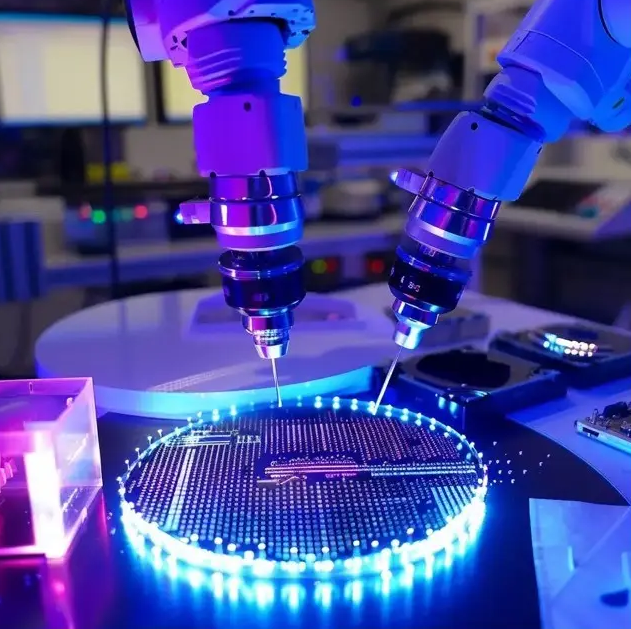
On the lithography floor, the photoresist bake isn’t some pre-show step. It’s the thermal anchor for linewidth control. If the hotplate drifts, your CD uniformity drifts right along with it, and the scrap pile starts to climb fast.
What actually matters
We built this heating platform around one thing: repeatable temperature performance. Across the wafer, it holds setpoint within ±0.1°C, so your soft bake and hard bake profiles stay identical, run after run. The heater uses short-wave infrared with quartz components, giving you fast ramp-up and tight thermal coupling—without hot spots. It’s engineered for cleanroom duty, supporting Class 1–100 environments with low outgassing and zero particle generation at the process interface. Energy use comes down through recirculating airflow and a high-efficiency drive train, cutting power draw without adding thermal inertia that slows changeover.
Why it holds up in production
In high-mix fabs, lot-to-lot stability is the bottleneck you feel every shift. This unit locks down the thermal budget on every wafer, improving photoresist profile repeatability and keeping rework off the line. Faster ramp-to-soak and faster cooldown compress cycle time, so you get more throughput per bay. The energy savings add up over 24/7 operation—lower kWh per wafer, lower cooling load, fewer demand charges. Reliability has been proven in continuous runners, with zero unplanned downtime tied to the heating module across multi-month deployments.
The practical details
Installation needs a dedicated clean power feed and proper thermal anchoring to the chase. Mismatched busbars or uncontrolled ambient drift will eat into uniformity. The platform fits most track footprints, but integration still requires a short qualification run to lock in the recipe and exhaust coupling. Expect about a two-week commissioning window to match your existing lithography stack and hit your particle and temperature specs on the first pass.