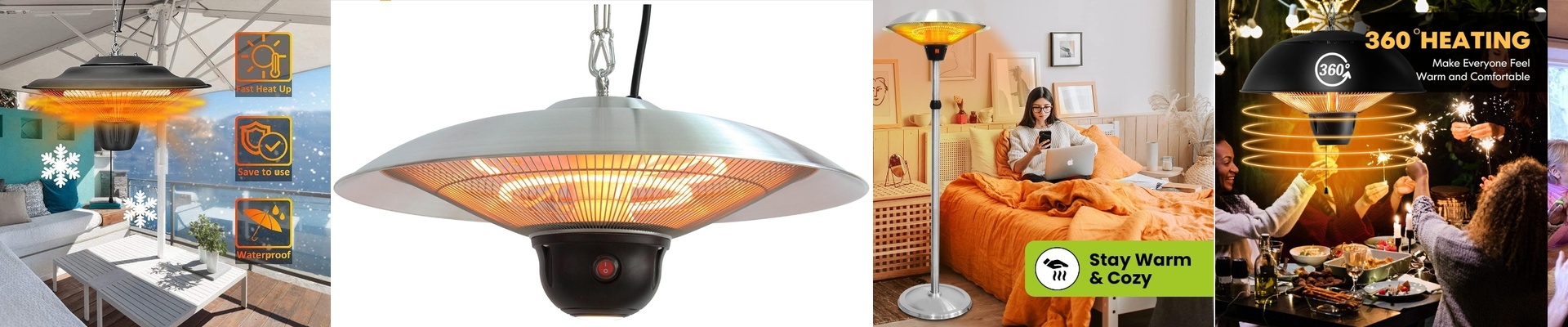
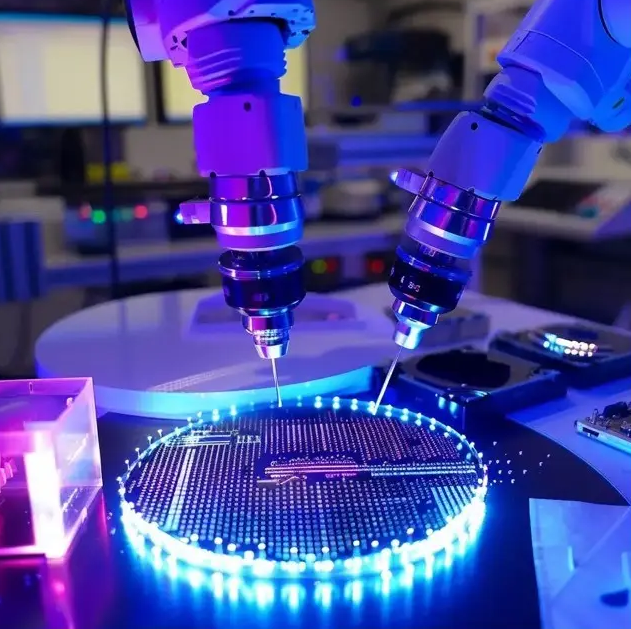
On the line, the bake module is the quiet bottleneck you feel every shift. You dial in the recipe, you expect the temperature to hit the mark the model predicts, and you expect it to stay there—cycle after cycle. When the lamp undershoots, the photoresist doesn’t fully de-solvate, and critical dimension control starts to drift. When it overshoots, the resist flows, scum shows up, and you end up scrapping wafers that should have been good. Either way, OEE slips and the maintenance calendar fills fast with emergency lamp swaps. We built our infrared lamp line for Applied Materials tools because thermal control in lithography isn’t optional. It’s the boundary condition that decides whether your process is stable—or just hopeful.
What matters, technically
Infrared heating for semiconductor bake stages is about matching the lamp’s thermal response to the wafer’s thermal mass and the photoresist chemistry. We use short-wave infrared (NIR) emitters because they deliver fast, direct radiant heating with quick rise and fall times—exactly what you need for tight thermal budgets in soft bake and hard bake. The specs translate straight into control on the floor:
- Wavelength and response: Short-wave NIR couples energy into the wafer stack quickly, so you can hold the bake profile tight. Photoresist behavior is temperature-time dependent, and a slow ramp or ringing overshoot changes the effective bake.
- Thermal uniformity: The lamp assembly is engineered for wafer-level uniformity within**±0.1°C**across the active bake surface. That’s not a marketing number—it’s the tolerance band that keeps CD variation in spec and cuts down edge-of-field excursions.
- Temperature repeatability: Expect**±0.5°C**setpoint-to-setpoint across lots. Repeatability is the foundation of qualification and re-qualification. If the bake module can’t repeat, you can’t lock down the process window.
- Cleanroom compatibility: The lamp and hardware are rated forClass 1–100environments. Materials and construction are chosen to keep particle generation at zero during operation and to survive wet cleans without outgassing.
- Zero particle generation: The quartz envelope and fixture design are optimized to avoid flaking and minimize particulate shedding. In lithography, particle count is the silent yield killer.
- Reliability and uptime: The lamp is specified for24/7 operationwith a target ofzero unplanned downtime. We measure reliability in hours between interventions, not in marketing claims.
- Fast thermal cycling: Fast ramp control supports high-throughput recipes without giving up profile control. The lamp tracks tight bake sequences with minimal settling time. None of this is abstract. It’s the difference between running a bake that lands inside the process window and chasing drift with offsets that compound across layers.
Why it works where it matters
In wafer fabrication, the bake step is where lithography becomes real. Soft bake removes the casting solvent; hard bake cures the resist and gets it ready for etch or implant. Either way, it’s a precision thermal operation, and the tool’s performance comes down to the lamp. Matched to Applied Materials bake modules, our infrared lamp gives you:
- Photoresist bake temperature precision: The lamp holds the wafer at the intended bake temperature with minimal overshoot. That keeps the resist profile consistent and reduces scum and footing at pattern edges.
- Process repeatability across lots: When setpoint repeatability is stable, qualification is faster and re-qualification happens less often. You stop tuning the bake for every lot.
- Wafer-level thermal uniformity: Uniform heating means the center and edge see the same thermal history. The payoff is better critical dimension uniformity and fewer edge-of-field failures.
- Cleanroom discipline: The lamp runs without adding particles. In Class 1–100 environments, that translates to fewer yield-limiting defects and less time spent on preventive cleaning.
- Lower operating cost: Infrared heating is efficient and targets the wafer directly. Energy use drops compared with systems that heat large masses indirectly, and cycle times can be reduced without compromising the profile.
- Fewer lamp replacements: Reliability means fewer interventions. Fewer swaps cut spare parts inventory, reduce tool downtime, and keep the maintenance schedule predictable. This is what it looks like on the floor. The line runs longer between PMs. Rework bins shrink. Process capability indices hold steady because the thermal input stays stable.
What you need to know
Installation is straightforward, but it isn’t plug-and-play without planning.
- Compatibility: The lamp is engineered to integrate with Applied Materials tools. Before ordering, confirm the exact model and connector interface against your tool documentation.
- Clean handling: Even with a particle-optimized design, handle the lamp in cleanroom conditions. Gloves, proper ESD control, and a clean workspace keep contamination out during install.
- Thermal setpoint calibration: For the best results, calibrate the bake module temperature with a certified thermocouple or wafer mapper. The lamp performs best when the temperature feedback path matches the recipe.
- Power and cooling: Make sure the tool’s power and cooling paths are clean and stable. Infrared lamps run hot, and cooling performance directly affects thermal stability. One practical trade-off: the lamp runs hot enough that you need disciplined cooling and shielding. Plan airflow and guarding as part of the install. The payoff is thermal stability, but only if the surrounding system supports it. If your goal is to hit the bake profile, keep particle counts low, and keep the tool running, the infrared lamp isn’t an accessory. It’s the thermal heart of the bake module. We design it to match the tool, the process, and the cleanroom—so your line runs the way it was qualified.