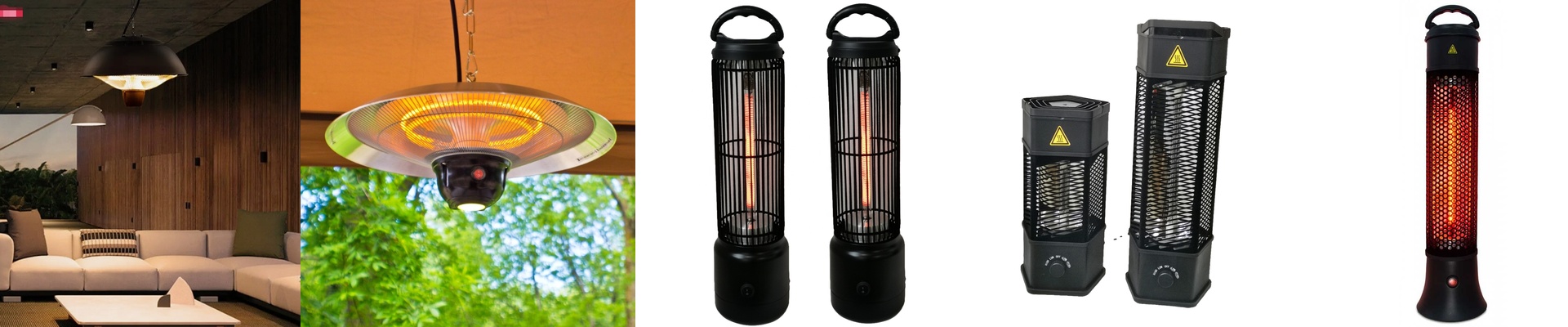
Why We Put Every Waterproof Infrared Heater Through Hell Before It Gets to You
We don’t build electric patio heaters for a pristine lab. We build them for the real world—where weather doesn’t ask permission. That’s why every single unit gets a brutal damp-heat aging test before it ever leaves the factory. The point is simple: find the weak spots early. Long before they find your customer.
This isn’t a beauty treatment. It’s a gut check.
We put the heater through the kind of steam, condensation, and on-again, off-again temperature swings it will see in bathrooms and covered outdoor spots. If a seal is going to leak, it will show itself here. If a terminal is going to corrode, it will give up the secret. If a coating is going to peel under heat and humidity, it will happen on our watch.
Here’s what’s actually happening under the hood
An electric infrared heater is, in plain terms, a high-current, high-temperature system packed into a tight space. Water doesn’t just cause a short. It speeds up oxidation, chews through insulation, and pushes the whole thing toward early failure. So we run our burn-in the hard way: We hold the heater at high temperature in high humidity—for a long stretch. Then we cycle the power on and off again and again. That stresses the joints, the lamp-to-reflector connection, and every waterproof sealing point. After that, we check for electrical stability, consistent output, and whether the build is still solid.
What this means for you, on the job
You’re not buying a heater that only performs on day one. You’re buying one that keeps doing its job after months of moisture, temperature swings, and the kind of wear that quietly destroys weaker gear. We’re validating the entire sealed path—housing gaskets, wiring entries, connector interfaces—so the protection isn’t just claimed. It’s proven.
Yes, it costs more. And yes, it’s worth it.
Running every unit through extended burn-in adds time. It adds cost. But it prevents the headaches that show up later—field failures, callbacks, warranty work—and those cost way more. For engineers and specifiers, the payoff is the peace of mind that performance stays predictable. The heater keeps output stable, holds its electrical behavior, and stays safe in damp conditions. Because reliability shouldn’t be a promise you hope holds up. It should be something you can measure, trust, and rely on—even when the air is wet and the weather won’t quit.