
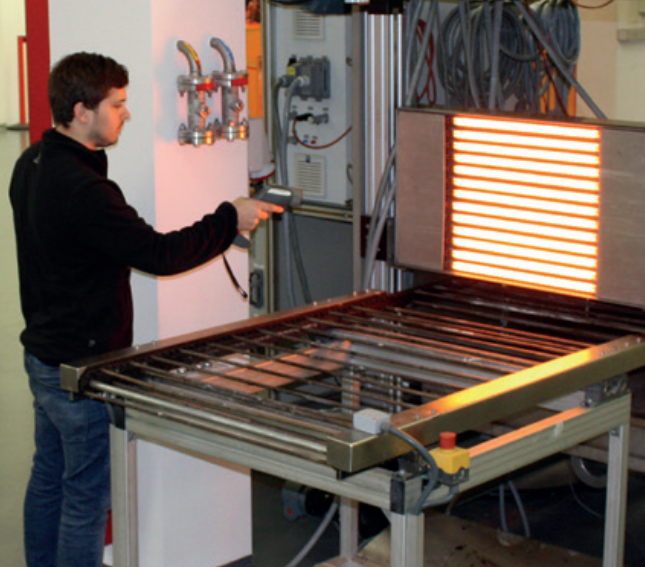
Cutting Carbon in Semi-Fab: It All Starts with the Housing
If you’re working in semiconductor fab, you know the drill. You need a thermal profile that’s dead-on, or you’re just making expensive coasters. Lately, there’s been a big push to hit carbon neutrality, which means we’re ditching those old-school resistive heaters and moving toward targeted IR systems. But here’s the thing: the IR lamps are only half the battle. The real magic happens in the stainless steel housing.
Managing the Heat
We stick with high-grade stainless steel because it doesn’t off-gas. In a cleanroom, that’s non-negotiable. But I don’t look at the housing as just a bracket to hold things in place. Think of it as a mirror. By nailing the focal point of those IR lamps, we can point the energy exactly where the wafer is sitting. When you stop heat from leaking into the rest of the tool, your chillers don’t have to fight so hard to keep things cool. That’s where you actually see the energy bills drop.
Squeezing Out Every Bit of Efficiency
Carbon reduction is really just a game of inches. We build these housings to keep the emitter as close to the target as possible. The shorter that gap, the faster the heat flux. You get the wafer up to temp quicker, which means shorter cycle times and more throughput. We also spend a lot of time on custom mounting points. Why? Because if a lamp shifts even a couple of millimeters, you get hot spots. And hot spots mean scrapped wafers. Nobody wants that.
The “Breathing Room” Problem
Stainless steel is tough, but it still grows when it gets hot. When you’re running at peak load, that housing is going to expand. If you build it too tight, the frame warps. Worse, the stress can snap your lamp seals or crack the quartz. It’s a nightmare to fix. The trick is finding that sweet spot—giving the metal enough room to “breathe” while still keeping everything rigid. Do it right, and your heating elements last way longer. Do it wrong, and you’re replacing parts way too often.